
Listen Along:
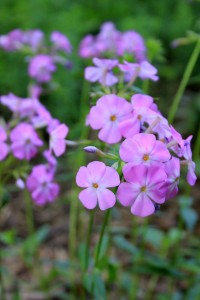
Phlox blooms can be purple, pink, and occasionally white.
This time of year, visitors to the Blue Ridge Parkway can expect to see many of the common summer varieties of our beautiful blooming flowers. Click on a specific wildflower to learn where along the Parkway it can be found (by milepost), what it looks like, and more.
In Virginia at the far northern end of the Parkway, we are seeing Queen Anne’s Lace, Common Milkweed, Spotted Knapweed, Red Clover, Daisy Fleabane, Rosinweed, Flowering Spurge, Smooth Sumac, Wild Bergamot, Common Yarrow, Horsenettle, Black Cohosh, White Snakeroot, Mapleleaf Vibernum, and Thoroughwort all blooming.
In North Carolina from Linville Falls towards the Minerals Museum and Crabtree Falls, we have blooms of Black-Eyed Susan, Beebalm, Black Cohosh, Coreopsis, Garden Phlox, Indian Pipe, Morning Glory, Goldenrod, Turk’s Cap Lily, and Sourwood trees.
In the Craggy Gardens area through Asheville, we have blooming Black-Eyes Susan, Yarrow, Queen Anne’s Lace, Oxeye Daisy, White Bergamot, Beebalm, Spiderwort, Phlox, Doddervine, Mullein, Cutleaf Coneflower, Turk’s Cap Lily, Common Rattlesnake Plantain, Low Bindweed, Mountain St. John’s Wort, and Sourwood trees.
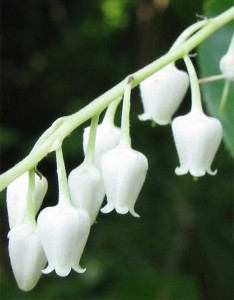
Sourwood Trees put out blooms all along their branches in the Craggy Gardens area.
At the southern end of the Parkway there are blooms of Coreopsis, Turk’s Cap Lily, Beebalm, Black-Eyed Susan, Mountain St. John’s Wort, Fly Poison, Cutleaf Coneflower, Lobelia, Doddervine, Queen Anne’s Lace, various Wood Asters, Indian Pipe, Goldenrod, Pale Jewelweed, Clingman’s Hedge-nettle, and Sundrops.
We are starting to see some blueberries ripening at the higher elevations, so get ready to go picking!
The Parkway is a beautiful place to spend your summer, but it is not like most other roads, so take some special precautions while driving. Above all, slow down and take your time. Use the overlooks to let traffic that backs up behind you go by. Enjoy the view, but watch the road.